
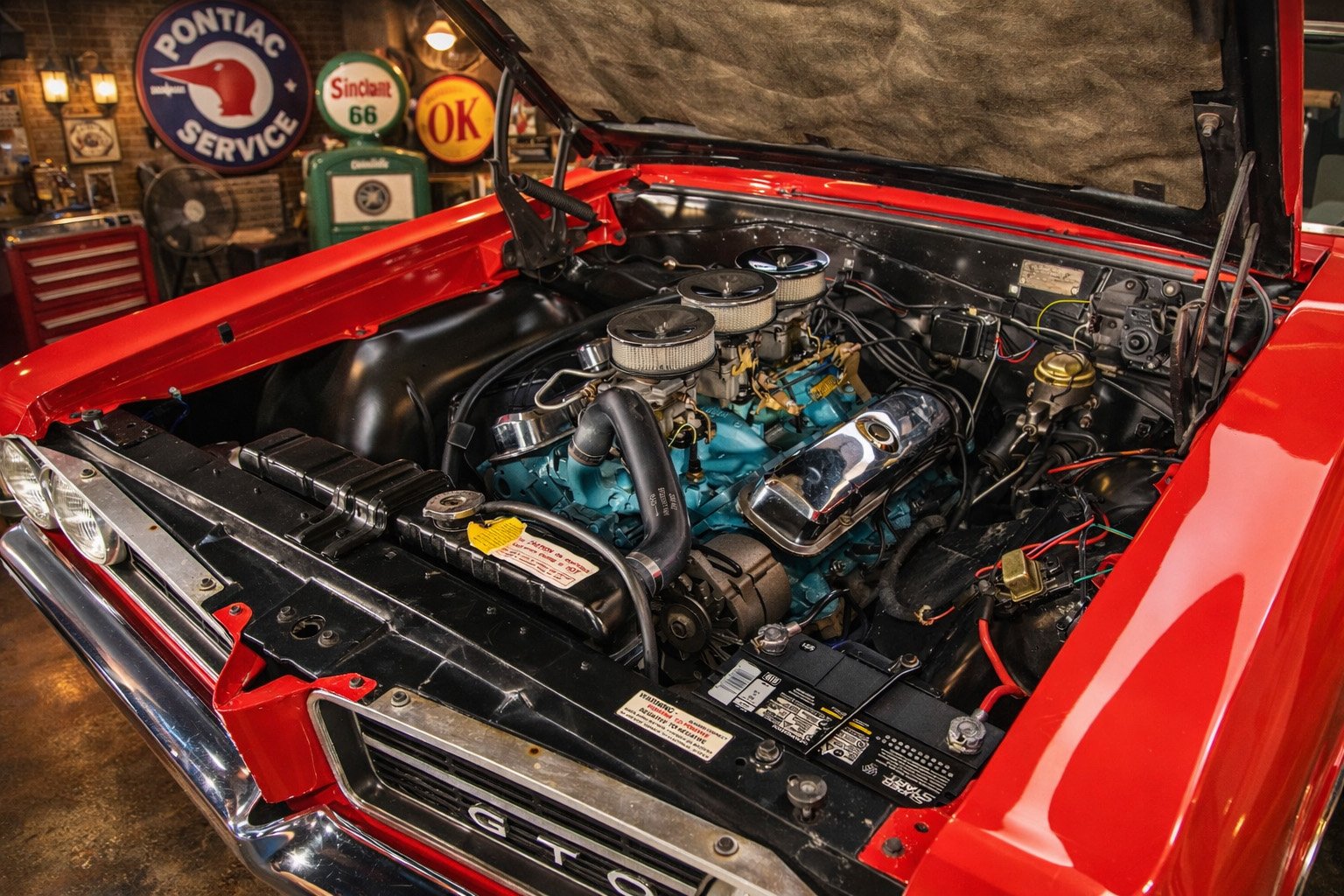
Pontiac GTO Engine Options Through the Years
Engine Options and Performance Through the Years
The Pontiac GTO became famous not just for its styling but for the powerful engines that defined the muscle car era. From the early 389 cubic-inch V8 that launched the GTO in 1964 to the high-performance Ram Air engines and later large-displacement 455 options, Pontiac continually evolved its engine lineup to balance performance, drivability, and changing regulations. Understanding the engines offered across different years helps collectors and enthusiasts compare models while appreciating how Pontiac’s engineering philosophy changed over time.
Early Muscle Years: 389 V8 and Tri-Power (1964–1966)
When the GTO debuted in 1964, it featured the 389 cubic-inch V8, a powerful engine that quickly established the car’s reputation. Buyers could choose between single four-barrel carburetor setups or the famous Tri-Power configuration, which used three two-barrel carburetors to increase performance. These early engines emphasized strong torque and street performance rather than high-revving race characteristics.
Transition to the 400: Growing Performance (1967–1968)
By the late 1960s, Pontiac introduced the 400 cubic-inch V8, bringing increased horsepower potential while maintaining reliability. This period marked the beginning of performance upgrades that would later evolve into the Ram Air era, making the 400 one of the most recognizable engines associated with classic GTO performance.
The Ram Air Era: Peak Muscle Car Performance (1969–1970)
Many enthusiasts consider 1969 and 1970 the golden years of GTO engine performance. Pontiac introduced several Ram Air variants designed to improve airflow and increase horsepower, powering some of the most iconic GTO models, including the famous Judge package.
- Ram Air I
- Ram Air II
- Ram Air III
- Ram Air IV
The Big-Block Feel: 455 Engines and Changing Times (1970–1974)
As the muscle car era began to shift, Pontiac introduced the 455 cubic-inch V8, focusing more on torque and drivability than peak horsepower numbers. Even as regulations and insurance pressures grew, these engines maintained strong real-world performance and helped define the later classic GTO years.
Modern Revival Engines: LS Power Returns (2004–2006)
When Pontiac revived the GTO in the mid-2000s, the focus shifted to modern engineering. The 2004 model featured the LS1 V8, while later versions received the more powerful LS2 engine. These engines delivered contemporary performance while honoring the spirit of the original muscle car.
Why GTO Engines Still Matter to Collectors
Engine choice remains one of the most important factors when evaluating a Pontiac GTO today. Original engine configurations, documented Ram Air packages, and rare performance options often influence collector interest and auction values, making engine history an essential part of understanding the Pontiac GTO legacy.